Why "Deauth" Devices Are Becoming a Burglar's Tool of Choice
#DeauthAttack #WiFiSecurity #SmartHomeSecurity #HomeSecurity #BurglaryPrevention #IoTSecurity #RFDetection #SignalSafePro
Home security has quietly shifted over the last decade. Instead of alarms and deadbolts, most of us now rely on a network of Wi-Fi connected devices. Video doorbells, indoor cameras, smart locks to know what's happening at our front door. That shift has created a new blind spot, and criminals have noticed.
What Is a Deauth Attack?
Wi-Fi deauthentication ("deauth") is a built-in feature of the 802.11 wireless standard, originally designed so networks could cleanly disconnect a device. For example, when a router reboots. A deauth attack abuses this feature by sending forged disconnect signals to a target device, forcing it off the network.
It's a denial-of-service attack, not a hack in the traditional sense. Nothing is "broken into." The device is simply knocked offline until the attacker stops sending the signal.
Why This Matters for Home Security
The problem is what deauth attacks can disconnect. Video doorbells and Wi-Fi cameras depend entirely on a live connection to send motion alerts, stream footage, and record. Cut that connection, even for a few minutes, and the device goes dark. No alert, no livestream, no evidence.
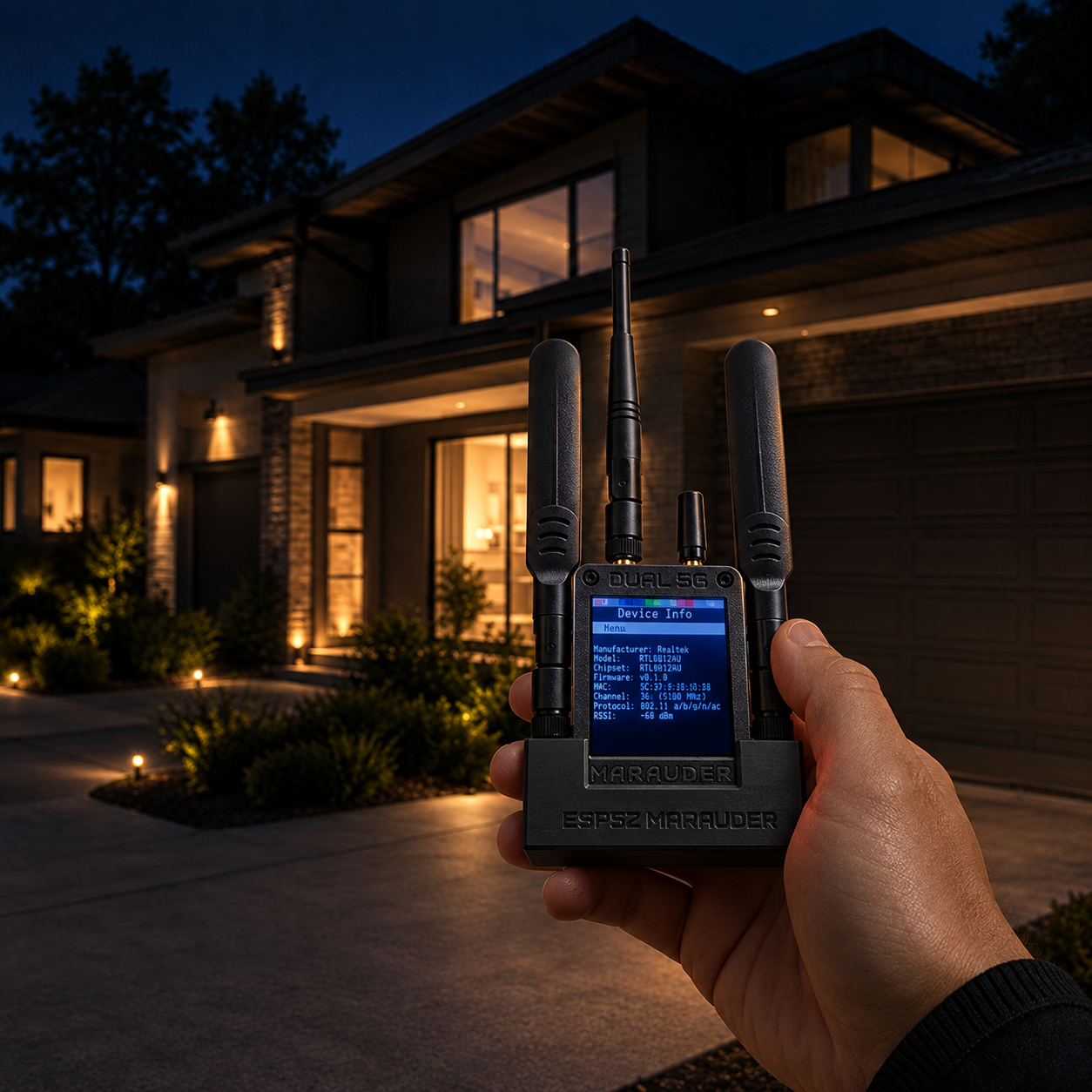
Security researchers and consumer advocates have flagged a rise in small, purpose-built deauth devices, some styled to look like ordinary watches or key fobs, sold online for the price of a takeaway meal. A device in range of a home network can silence a doorbell or indoor camera for as long as it's held near the property, which is exactly the window a burglar needs to approach a door unseen and unrecorded.
This isn't a theoretical scenario. It follows the same logic security consultants have warned about for years: any security system with a wireless link is only as strong as its ability to stay connected. Disable the link, and the "smart" system reverts to being no system at all.
The Layer Most Homeowners Overlook
Most home security advice focuses on locks, lighting, and camera placement, all still important. But few homeowners think about defending the wireless layer itself. A camera pointed at the right spot is useless if it's been silently knocked offline before the intruder ever steps into frame.
A few practical points worth knowing:
- WPA3 and Protected Management Frames (PMF/802.11w), where supported by your router and devices, make deauth attacks significantly harder to pull off, since they authenticate the management frames that deauth attacks forge.
- Wired connections (Ethernet-backed cameras and hubs) are immune to Wi-Fi deauth entirely worth considering for a primary camera covering the main entry point.
- Detection is the missing piece. Most homeowners have no way of knowing a deauth attack is even happening — there's no alert, because the alert-sending device is the one being silenced. A separate monitor that watches for the RF signature of jamming or deauth activity, independent of the home Wi-Fi network, closes that gap.
The Bigger Picture
Smart home security was sold on the promise of visibility, always knowing what's happening at your door. Deauth devices exploit the one dependency that promise was built on: the wireless connection itself. As these tools get cheaper and more accessible, the gap between "camera installed" and "camera actually working when it matters" is only going to matter more.
Understanding the risk is the first step. The next is making sure your defenses don't have a single point of failure that a £20 device can switch off.