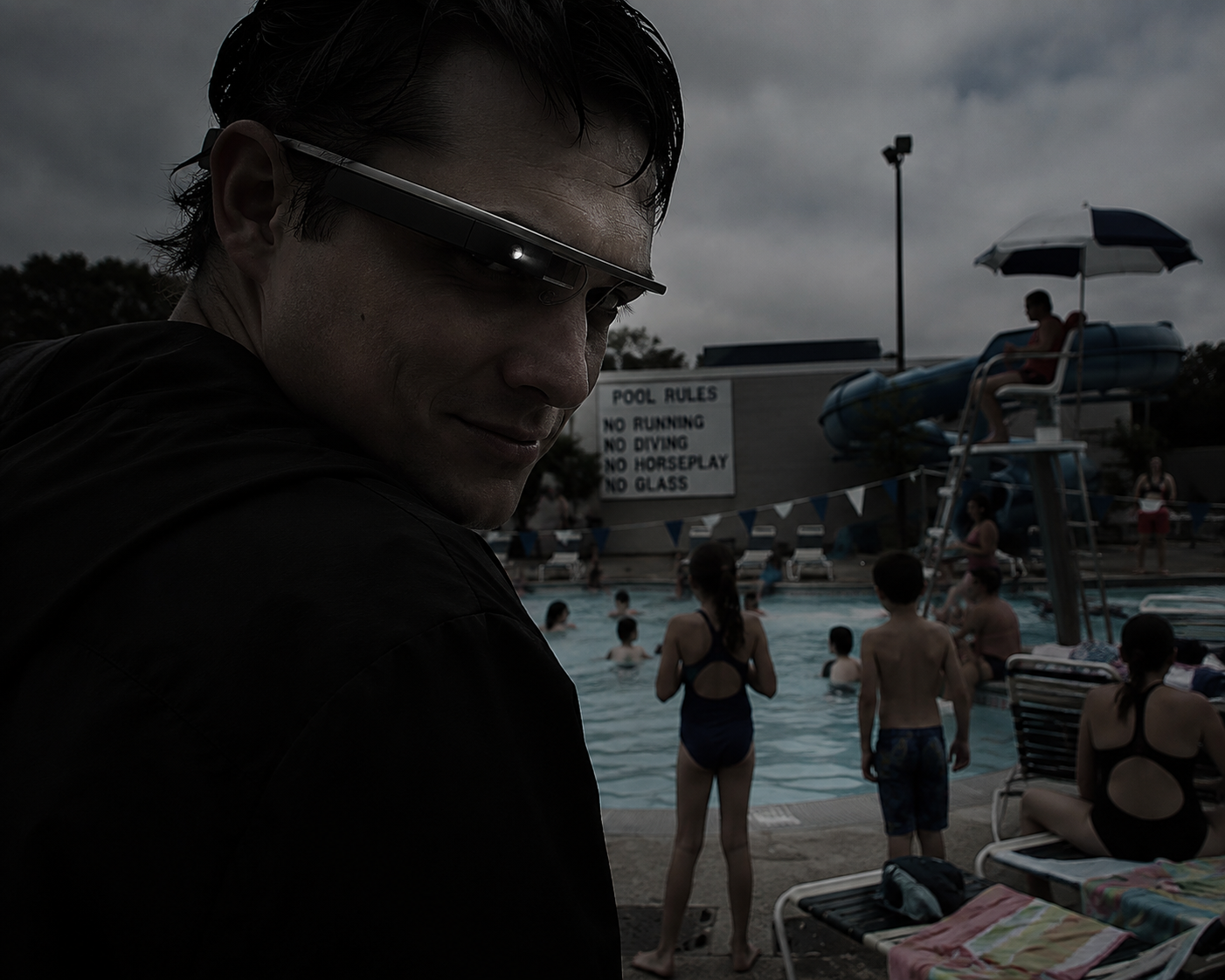
Smart Glasses and Privacy: Why the Public Should Be Worried
#SmartGlasses #SmartGlassesPrivacy #FacialRecognition #DigitalPrivacy #ChildSafeguarding #SurveillanceTech #PrivacyConcerns #SignalSafePro
A few years ago, a camera hidden in a pair of glasses was the stuff of spy films. Today, it's a consumer product sitting on shelves at mainstream electronics retailers, priced like a decent pair of headphones. As smart glasses from major tech companies move from novelty to mass-market accessory, they're quietly creating one of the trickiest privacy problems of the decade not because the technology is malicious, but because it's discreet.
Here's why that discretion matters, and why the public should care.
1. You Can't Tell When You're Being Recorded
Traditional cameras phones, camcorders, CCTV come with visual cues. You see someone holding a phone up, or you spot a camera mounted on a wall. Smart glasses remove that cue almost entirely. A small LED light is often the only indicator that recording is active, and in a busy bar, a crowded train, or bright daylight, that light is easy to miss or simply ignore.
This means the basic social contract around being photographed or filmed the ability to notice and object quietly breaks down. People are increasingly being recorded in gyms, changing rooms, waiting areas, and casual conversations without any real chance to consent or opt out.
2. Recording Becomes Ambient, Not Intentional
With a phone, filming is a deliberate act. You have to pull it out, open the camera app, and point it. Smart glasses collapse that friction to almost nothing a voice command or a discreet tap. The result is a shift from occasional, intentional filming to ambient, incidental filming, where bystanders are captured simply because they happened to be in someone's field of view.
Multiply that by the number of people wearing these devices in public spaces, and you get a world where anonymity in public long assumed as a baseline right becomes far harder to guarantee.
3. Facial Recognition Turns Casual Glances Into Data Points
The bigger concern isn't just recording it's what recording enables. Several smart glasses projects and third-party apps have demonstrated real-time facial recognition capabilities, allowing a wearer to glance at a stranger and pull up their name, social media profiles, or other identifying information within seconds. Even where manufacturers officially restrict this functionality, developer communities have shown how quickly such restrictions can be worked around.
This transforms a public street into a searchable database, where a stranger's face becomes a query rather than just a face.
4. Audio Capture Raises the Stakes Further
Many smart glasses also include always-listening microphones for voice assistants. Conversations that would once have been genuinely private a quiet chat at a café table, a phone call overheard on a train can now be captured, transcribed, and potentially stored or shared, often without the other party ever knowing a recording device was nearby.
5. Data Doesn't Stay on the Device
Recorded footage and audio frequently sync to cloud services, get processed by AI models, or feed into advertising and analytics pipelines. Even well-intentioned wearers may not fully understand where their recordings end up, who can access them, or how long they're retained. For bystanders who never agreed to any of this, there's essentially no visibility or control at all.
6. Existing Laws Weren't Built for This
Most privacy and surveillance laws were written with visible cameras, CCTV systems, or handheld recording in mind. Wearable, near-invisible recording devices sit in a legal grey area in many jurisdictions regulators are still catching up, and enforcement is inconsistent. Venues like schools, hospitals, gyms, and hospitality businesses are increasingly having to write their own smart-glasses policies simply because the law hasn't caught up.
7. The Safeguarding Risk for Children
Nowhere does the smart glasses privacy problem feel more urgent than when children are involved. Schools, playgrounds, swimming pools, sports clubs, and family events are all places where children are naturally present in large numbers and all places where discreet recording is especially hard to police.
A few specific concerns stand out:
- Covert recording of minors: Because the recording indicator is small and easy to miss, children can be filmed in changing rooms, at school gates, or during activities without any adult noticing or being able to intervene.
- Facial recognition and identification: The same glance-and-identify capability that raises concerns for adults is far more troubling when pointed at a child. Being able to instantly pull up a name or location tag connected to a child's face is a serious safeguarding red flag, particularly around schools and youth venues.
- Location and pattern tracking: Repeated, ambient recording near the same school run, park, or clubhouse can reveal a child's routine the kind of pattern that safeguarding professionals specifically warn against exposing.
- Institutional blind spots: Many schools and youth organizations have detailed policies about phones and cameras but haven't yet updated safeguarding policies to explicitly cover wearable recording devices, leaving a gap that staff and parents may not realize exists.
This is why safeguarding bodies, schools, and youth-focused venues are increasingly being encouraged to treat smart glasses as a distinct category in their child protection policies not just lump them in under "mobile phones" and to train staff to recognize and challenge discreet recording devices the same way they would an unfamiliar adult with a camera on school grounds.
What Can Be Done About It
- Venue-level policies: Businesses and public institutions are starting to introduce explicit "no recording devices" signage and policies covering smart glasses specifically, not just phones and cameras.
- Updated safeguarding policies: Schools and youth organizations are being urged to explicitly name wearable recording devices in child protection policies, alongside staff training on how to spot and challenge them.
- Detection technology: Just as hidden camera and RF detectors have become standard tools for identifying covert surveillance devices, similar detection approaches are being explored for identifying active smart glasses recording in sensitive environments.
- Manufacturer accountability: Pressure is growing on manufacturers to make recording indicators more obvious and harder to disable, and to build stronger default restrictions around facial recognition features.
- Public awareness: Simply knowing that this technology exists and what it's capable of is a meaningful first step. People are far more likely to notice a discreet recording light, or ask a question about a new pair of glasses, once they understand what's possible.
The Bottom Line
Smart glasses aren't inherently sinister most people using them are just trying to take photos, get directions, or use a hands-free assistant. But the technology has quietly shifted the balance of power around public privacy: recording has become invisible, identification has become instant, and consent has largely dropped out of the equation.
As adoption grows, the conversation needs to move beyond "is this cool tech" to "who is protected, and who isn't." Until laws, workplace policies, and public awareness catch up, the burden of protecting privacy in public spaces is falling on individuals and businesses which is exactly why understanding this risk, and the tools available to manage it, matters now more than ever.